

Market Weekly · 2026-06-29—2026-07-05
2026-06-29—2026-07-05|Broad sector gains and rapid rotation beneath weak A-share indices
Executive summary
Hong Kong led major equity markets this week, with the Hang Seng China Enterprises Index up +3.20%. Commodities diverged: precious metals strengthened and Brent crude fell slightly. Major A-share indices were mixed and weak overall. Internal A-share breadth recovered markedly, with 80.6% of sectors rising and lower return concentration, but strong sectors were mainly reversals. Building materials and electronics recently weakened, communications and electrical equipment remained weak, and rotation was rapid. Sector prices and turnover changes aligned only partly; turnover changes reflect trading activity, not net fund inflows.
Comparing global equity markets
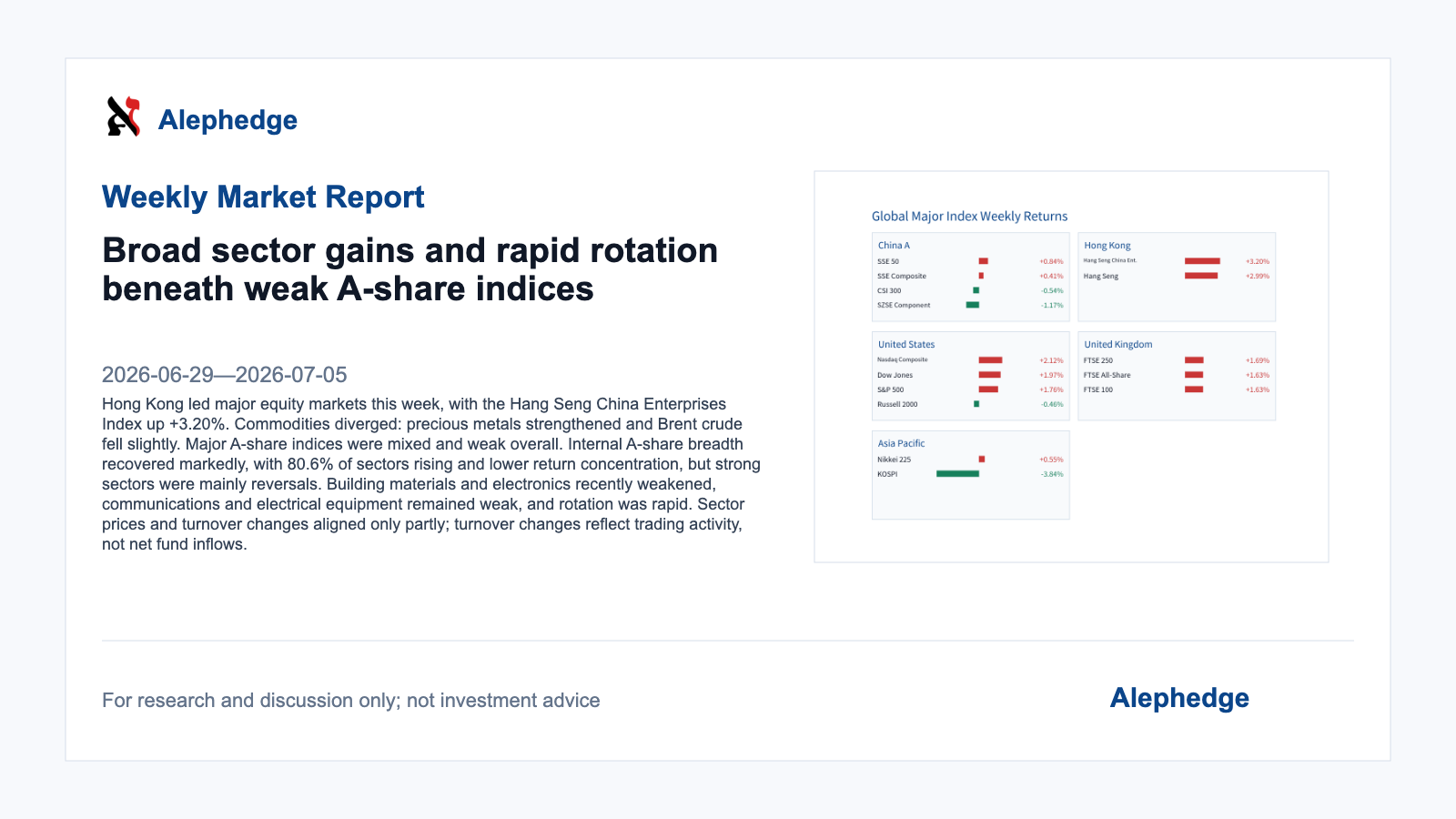
Hong Kong led the listed major equity markets, US equities rose overall, and A-share indices were mixed and weak overall. The Hang Seng China Enterprises Index rose +3.20% and the Hang Seng +2.99%, ahead of the Nasdaq Composite at +2.12%, the Dow Jones Industrial Average at +1.97% and the S&P 500 at +1.76%. In A-shares, the SSE 50 rose +0.84% and the Shanghai Composite +0.41%, but the CSI 300 fell -0.54% and the Shenzhen Component -1.17%. South Korea's KOSPI fell -3.84%. Weekly performance diverged markedly, with Hong Kong relatively advantaged and A-share index performance uneven.
Commodity signals
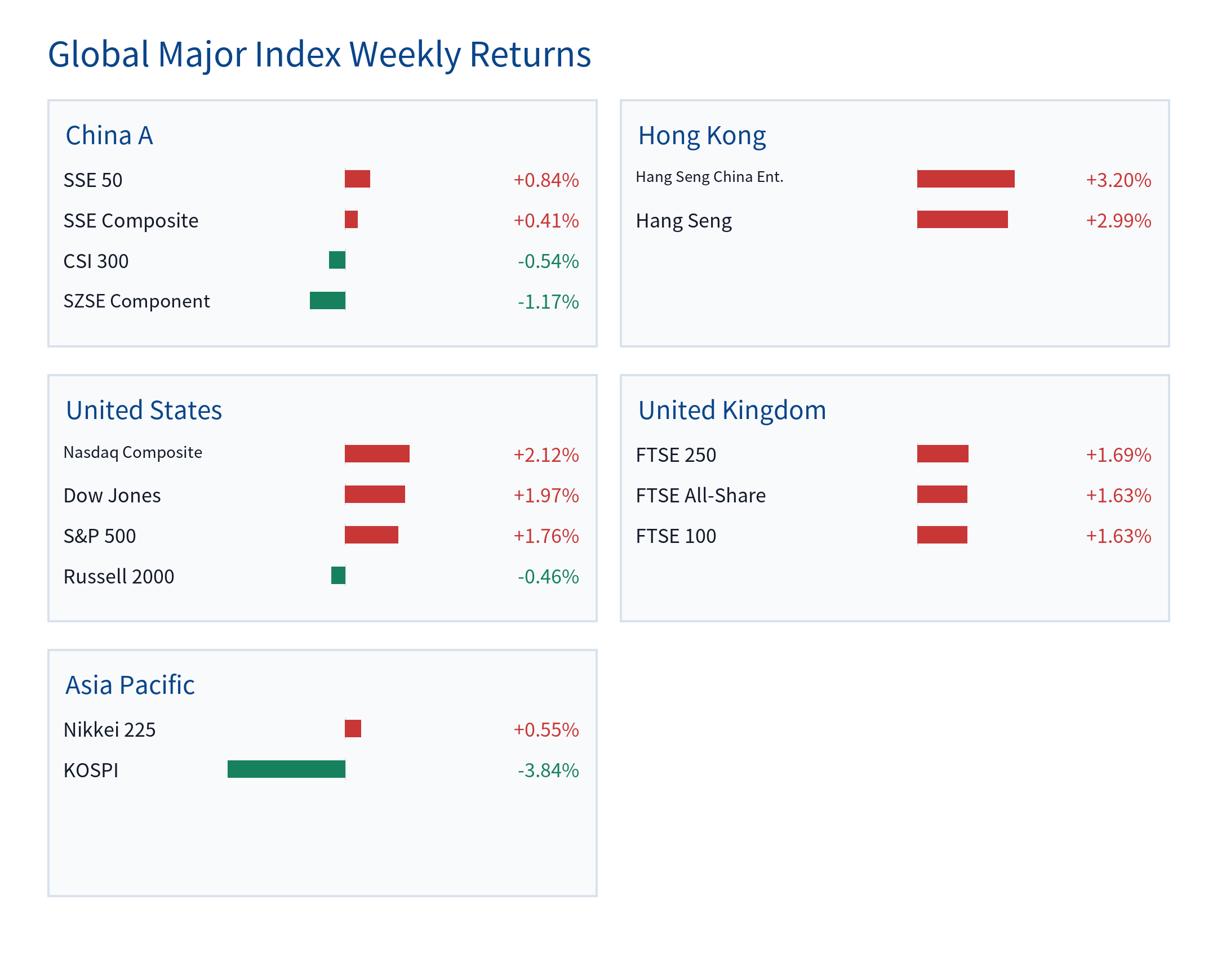
Precious metals strengthened while energy weakened this week. London spot silver rose +6.10%, silver futures +2.41%, London spot gold +2.30% and gold futures +0.83%; Brent crude fell -0.26%. Precious metals stood out, but without industrial metals data a fuller comparison is not yet possible. Products also have differing data cut-off dates, requiring caution in comparisons.
A-share breadth, concentration and sector rotation
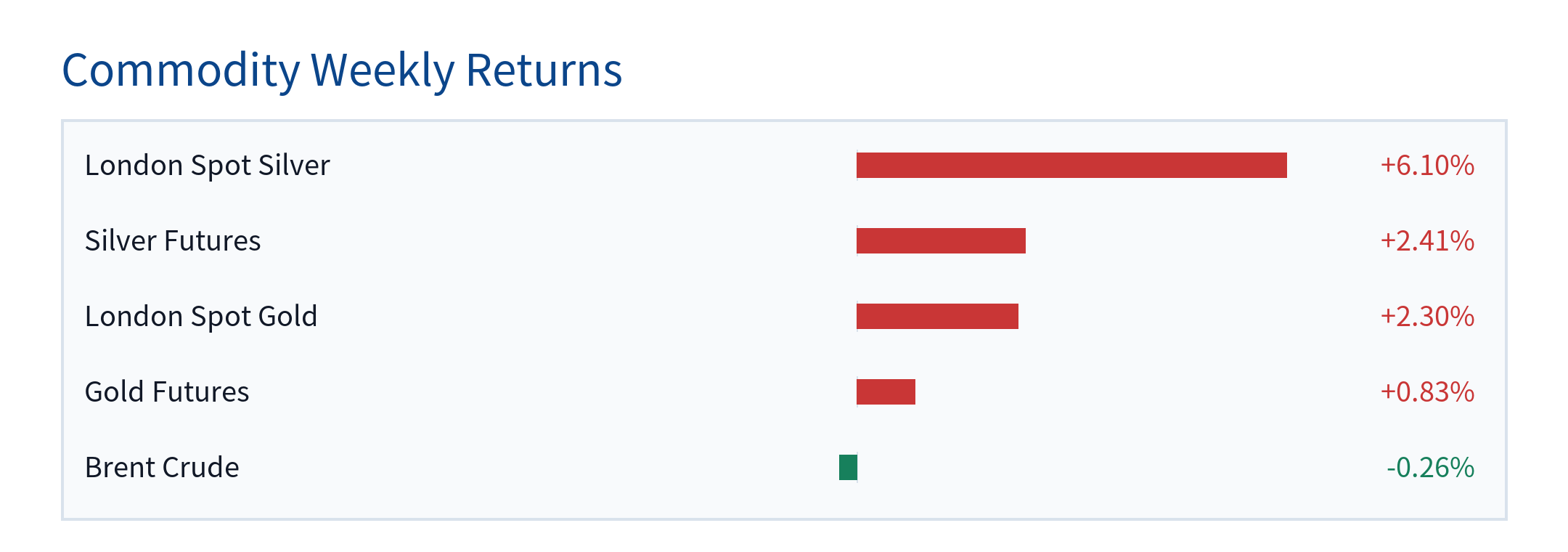
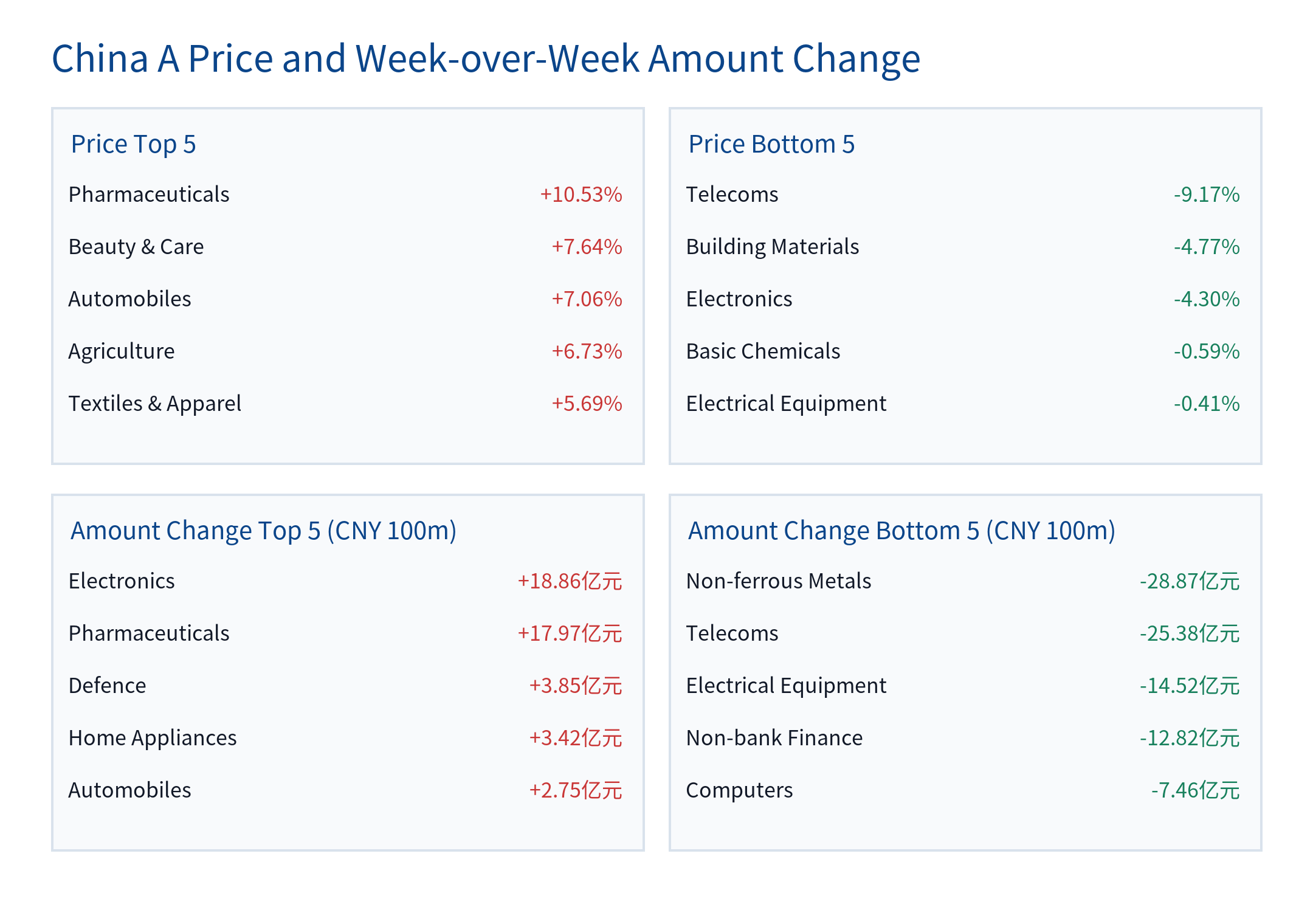
A-shares combined weak indices with broad sector gains. Breadth improved markedly, concentration fell and leadership favoured rapid rotation. A total of 25 sectors rose, representing 80.6%, and 27 outperformed the CSI 300, representing 87.1%, both above last week's 12.9% and 16.1%, diverging from the CSI 300's -0.54% fall. The gap between leading sectors' average return and the sector median was +6.29%, below last week's +9.74%, showing a narrower return advantage. Of the top five sectors, 4 were reversals and 1 mixed, with none continuing previous strength. Beauty and personal care rose +7.64%, moving from 29th to second; automotive rose +7.06%, from 30th to third. Building materials fell -4.77% and electronics -4.30%, both dropping from leading to low rankings and illustrating recent weakness. Communications fell -9.17% and remained weak.
A-share prices and changes in trading activity
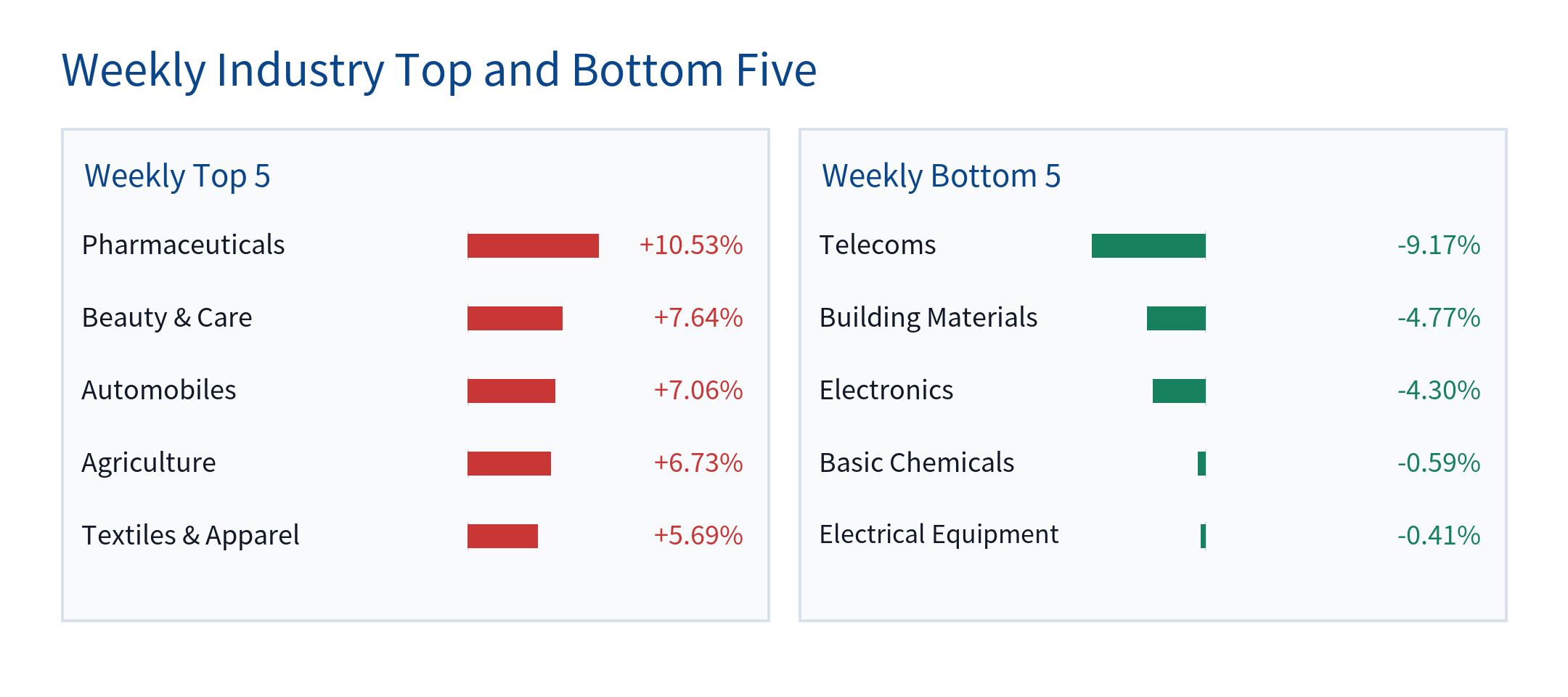
Sector prices and turnover changes partly overlapped but did not align fully. Turnover changes reflect trading activity only. Pharmaceuticals and biotechnology rose +10.53%, with turnover increasing +17.97 hundred million yuan; automotive rose +7.06%, with turnover up +2.75 hundred million yuan, combining rising prices with greater activity. Electronics had turnover up +18.86 hundred million yuan but fell -4.30%; non-ferrous metals had turnover down -28.87 hundred million yuan but rose +2.23%, showing that price direction cannot be judged by turnover changes alone. Communications and electrical equipment were weak in price and among the largest turnover declines, reflecting continued weakness this week.
What to watch
Watch changes in positive-return coverage and the breadth of sectors outperforming the CSI 300 to track whether this week's breadth improvement continues. Watch relative rankings among this week's strong sectors, and ranking changes in building materials, electronics, communications and electrical equipment, to observe evolving strength. Also watch consistency between prices and turnover changes, and weekly precious metals and energy performance. A fuller commodity comparison can follow once industrial metals data are supplied.
Analyst's view
Weekly market review: 2026, 29 June-3 July
A-shares rotate from high to low, Hong Kong rebounds from a forming base, US technology cools
At index level A-shares were not weak: Shanghai held 4000 and closed slightly higher on Friday, but internal divergence was extreme, with ChiNext and the STAR 50 under clear pressure. Hong Kong rebounded repeatedly, with internet platforms, biotechnology, gold and non-ferrous metals driving index recovery. The S&P and Dow remained high in the US, but AI hardware and semiconductor corrections dragged on the Nasdaq; cooling overseas technology also weighed on sentiment in A-share and Hong Kong technology supply chains.
I. A-shares: Shanghai edges higher, ChiNext is pressured, and internal divergence is extreme
A-share indices appeared stable this week, but a sharp internal style shift had already taken place.
At the 3 July close, the Shanghai Composite was at 4043.64, up 0.37% that day; the Shenzhen Component at 15597.51, up 0.64%; and ChiNext at 4019.93, up 0.07%. The market rose then retreated that day. Precious metals, motors and defence equipment led gains, while semiconductors, minor metals and electronic chemicals ranked near the bottom.
For the full week, A-shares clearly showed a strong main board and weak growth:
Pharmaceuticals and biotechnology were the strongest theme, gaining over 10%; beauty and personal care, automotive, precious metals and robotics were active. Previously strong technology areas such as communications, electronics, semiconductors and computing hardware were under clear pressure.
Funds withdrew from crowded, elevated AI hardware, semiconductors, CPO and PCB towards low-priced pharmaceuticals, robotics, precious metals, display panels, some traditional industries and defensive assets.
A-share feature this week: from crowding into technology to retaining strength and shedding weakness
The most notable change was a stress test for elevated technology stocks on Thursday and Friday.
Computing hardware, memory chips, optical communications and semiconductor equipment, which had previously risen enormously, saw clear profit-taking. Declines in technology heavyweights associated with STAR and ChiNext particularly caused ChiNext and the STAR 50 to underperform Shanghai.
Four main factors drove this technology correction:
First, excessive earlier gains and crowded leveraged positions;
Second, a simultaneous correction in overseas AI hardware, influenced by SemiAnalysis reports on pcb, nvd and meta;
Third, the approaching interim results window shifted investors from narratives towards checking orders, revenue and profit;
Fourth, funds actively sought low-priced alternatives, creating rotation from high to low.
On the 3 July A-share rebound, the market rose overall, but computing hardware and semiconductor supply chains mostly consolidated, with heavyweights such as Zhongji Innolight and GigaDevice rising then retreating;
This shows that technology's central theme has not ended, but has shifted internally from indiscriminate crowding towards retaining strength and shedding weakness. Only areas with real orders, the ability to deliver profits and interim-results support may navigate the correction successfully.
ETFs add semiconductors against the trend as institutions seek opportunities in disagreement
Despite this week's marked correction in elevated technology, ETF funds did not leave technology entirely and some added against the trend. Short-term funds were exiting elevated technology, but medium and long-term investors had not abandoned hard technology.
In other words, this is a repricing within technology rather than the end of its rally. Areas previously driven purely by themes and funds will be eliminated, while companies supported by industry trends, results and the ability to fulfil orders may offer better entry opportunities after the correction.
Hong Kong equities: repeated rebounds and early signs of a base, but no main advance yet
Hong Kong performed better than previously expected this week, mainly because short covering and buying at low levels jointly drove recovery after repeated earlier corrections.
On 3 July, the Hang Seng closed at 23350.03, up 1.28%; the Hang Seng TECH Index at 4499.00, up 1.00%. Zijin Mining, Hansoh Pharmaceutical and Tingyi led Hang Seng constituents; Horizon Robotics, BYD and JD Health led technology-index constituents.
Hong Kong's rebound had three features:
First, internet platforms stopped falling and rebounded, but this was more short covering than a trend reversal;
Second, gold, non-ferrous metals and resources performed well, showing continued preference for defence and low valuations.
Technically, the Hang Seng regained short-term moving averages and recovery momentum strengthened, but resistance remained at 23500—23800. Hong Kong currently looks more like it is forming a base than entering a new main advance directly.
Hong Kong focus: internet, innovative drugs, gold and non-ferrous metals, high dividends
Four areas merit attention next week.
First, internet platforms.
Tencent, Alibaba, Meituan and JD have already corrected substantially and have scope for a short-term technical recovery. Sustained strength, however, requires improving earnings expectations, continued buybacks and recovering foreign risk appetite.
Second, innovative drugs and biotechnology.
This is currently one of the clearest areas of shared momentum between Hong Kong and A-shares. Hong Kong innovative-drug stocks have greater upside sensitivity; if A-share pharmaceutical enthusiasm continues, Hong Kong biotechnology may keep attracting funds.
Third, gold and non-ferrous metals.
Resource heavyweights such as Zijin Mining are strong, driven jointly by expectations of rate cuts and safe-haven demand. If gold prices remain strong, Hong Kong gold and non-ferrous metals still offer tactical opportunities.
Fourth, high dividends and defensive assets.
With increased volatility in elevated technology, Hong Kong high-dividend stocks retain allocation value. Banking, telecoms and utilities have less upside sensitivity than growth stocks, but are more suitable as core holdings in a rangebound market.
US equities affect A-shares and Hong Kong mainly through technology sentiment.
Most US stocks actually rose this week, but chip stocks and AI winners kept correcting, dragging on the Nasdaq and echoing technology-supply-chain corrections in A-shares and Hong Kong. Global investors are therefore not universally exiting risk assets, but withdrawing from elevated AI hardware trades towards a more balanced allocation.
Whether A-share and Hong Kong technology stabilise next week therefore depends substantially on whether US semiconductors, AI hardware and optical communications stop falling in the short term. Further US technology corrections would keep A-share CPO, PCB, semiconductors and computing hardware under pressure.
Macro and policy: expectations of rate cuts strengthen as interim results season opens
US June employment data missed expectations, reducing bets on further rate rises. The dollar and Treasury yields weakened, temporarily improving global risk appetite. This was also an important backdrop to interest in gold, non-ferrous metals, pharmaceuticals and small and mid-cap stocks.
Domestically, July opens the interim results window, changing the market's trading rationale.
Risk warning
This report is compiled from the weekly data supplied and does not constitute investment advice. Weekly index, sector and commodity performance does not indicate future trends. Sector turnover changes from last week do not represent net fund inflows. Commodity cut-off dates differ and industrial metals data were not supplied, limiting the comparisons.